Boston Leather Guild

Leathers

Specific leathers, their working characteristics, best uses, and current sources. A heart marks a resource especially valued by Guild leadership.

Showing 6 of 6 resources.

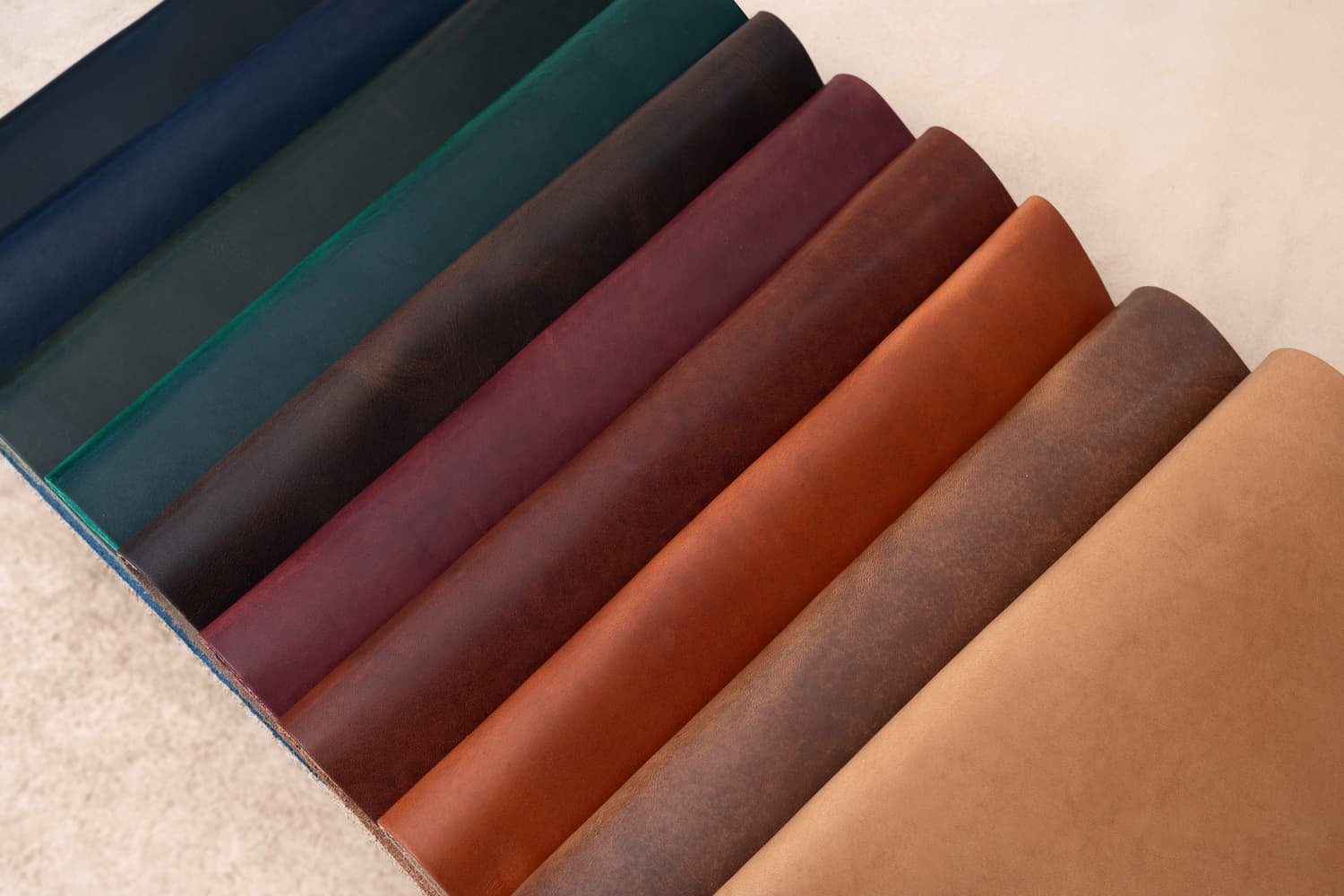
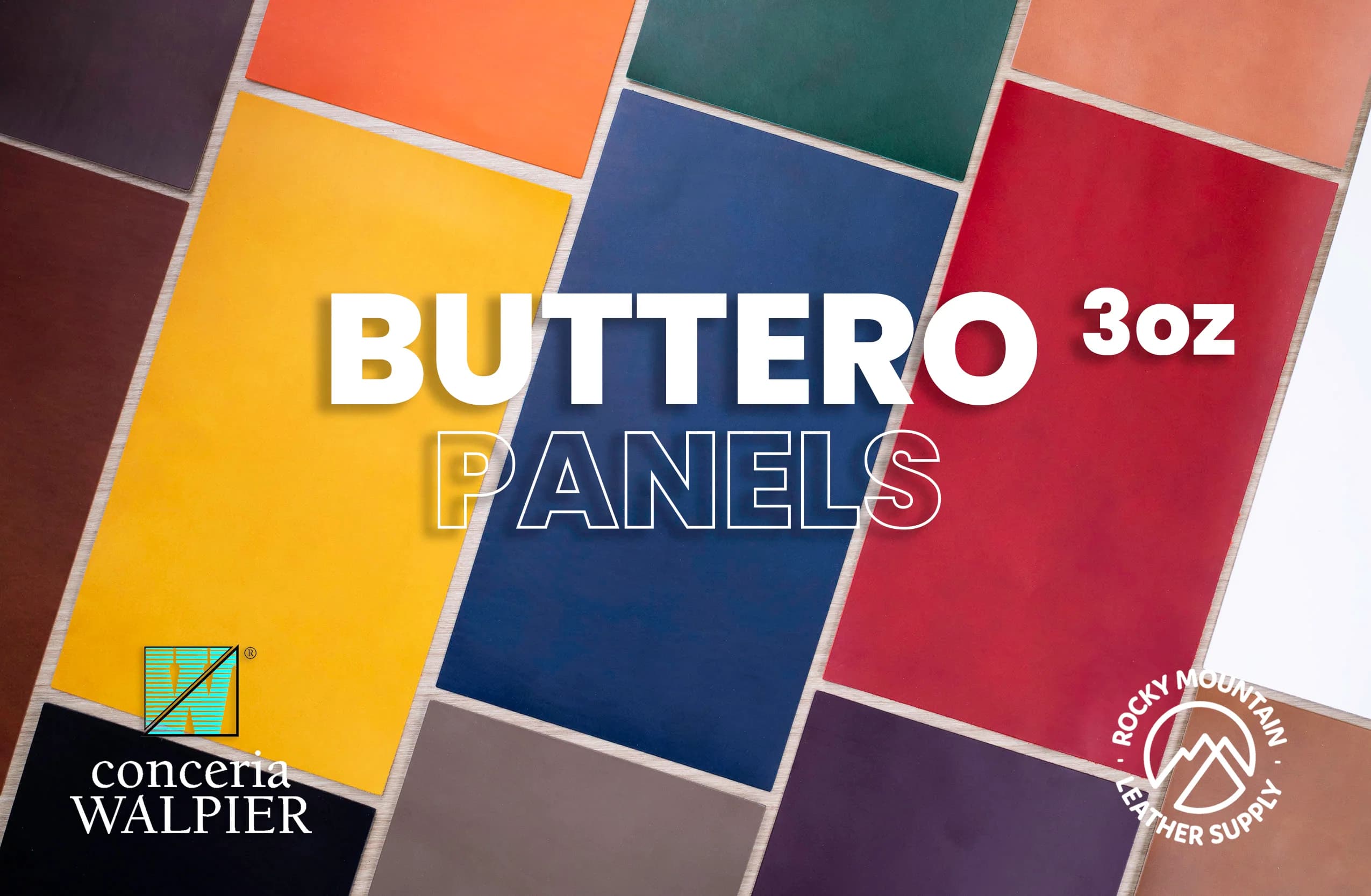
A fan of brightly colored Conceria Walpier Buttero leather panels

Buttero Especially valued by Guild leadership

Conceria Walpier Buttero is a smooth, full-grain Tuscan vegetable-tanned leather with saturated aniline color and a firm, confident temper. It cuts crisply, takes a glassy burnish, and gives wallets, straps, covers, and structured small goods a polished appearance that develops character with use.

Spec Sheet

Identity & Origin

Tannery or Maker
Conceria Walpier
Product Family
Buttero
Production Status
Current
Made In
Italy
Animal or Species
Bovine cowhide
Hide Form
Shoulder, Double shoulder, Panels

Construction & Finish

Grain or Layer
Full grain
Tannage
Vegetable tanned
Special Process
Dyed through, Aniline finished
Surface and Finish
Smooth aniline grain with a clean, lightly polished appearance
Temper
Firm

Dimensions & Availability

Typical Weight
3–7 oz · 1.2–2.8 mm
Typical Hide Size
Double shoulders commonly measure approximately 14 to 17 square feet.
Available Colors
Natural, Whiskey, Chestnut, Mahogany, Walnut, Chocolate, Black, Taupe, Red, Orange, Yellow, Green, Olive, Blue, Violet, Bordeaux, White

Material Character

Natural Variation
The smooth aniline surface preserves natural grain and can show scars, growth marks, and dye-lot variation. Light scratches are conspicuous when new but tend to blend into the developing patina.
Hand and Character
Firm, dense, smooth, and clean, with a mild luster and the substantial feel associated with tightly structured vegetable-tanned shoulder leather.
Structure and Stretch
Dimensionally stable and resistant to casual stretching. It holds sharp shapes well but can feel stiff when chosen too heavy for a folded design.

Working With It

Cutting and Skiving
Cuts crisply and skives cleanly with sharp tools. The dense structure rewards deliberate passes and makes thickness transitions easy to inspect.
Sewing
Produces orderly stitch lines and holds creases well. At heavier weights, accurate punching and adequate awl sharpness matter because the leather is dense.
Edge Behavior
One of Buttero's strengths. Properly beveled edges burnish quickly to a compact, glossy finish with minimal coating.
Tooling and Stamping
Takes creasing and light stamping cleanly, but it is not a substitute for unfinished carving leather when deep tooling is the goal.
Wet Forming
Can be shaped because of its vegetable tannage, though its firm temper and finished surface favor controlled, modest forming rather than dramatic molding.
Finishing Behavior
Usually requires no added surface finish. Resin-backed retail variants can provide a highly finished flesh side for unlined goods.
Wear and Patina
The polished surface records scratches early, then gains depth and sheen as those marks soften into an elegant, darker patina.
Practical Sensitivities
Surface scratches, glue, and water marks show readily on new leather. White is a pigmented variant and may behave differently from the aniline colors.
Care Notes
Brush or wipe clean first. Use conditioner sparingly and test on scrap because saturated colors and sheen can change with treatment.

Project Fit

Best Uses
Wallets, Cardholders, Belts, Watch straps, Journal covers, Writing pads, Structured small bags
Pairing Notes
Pair a 3 to 4 oz shell with thinner split Buttero for pockets. Resin-backed stock can eliminate a lining in some covers and bags; uncoated stock offers more flexibility for custom flesh-side finishing.

Where To Buy

Rocky Mountain Leather Supply

Conceria Walpier Buttero 3 oz Panels · 9 x 16 inch panel, 12 x 12 inch panel, 12 x 24 inch panel, Quarter hide · 3 oz / 1.2 mm listing, with free splitting · Natural, Whiskey, Chestnut, Mahogany, Walnut, Chocolate, Black, Taupe, Red, Orange, Yellow, Green, Olive, Blue, Violet, Bordeaux, White · Panels advertised at 90%+ yield · $24.99 · Starting retail price for a one-square-foot panel

Splitting available · Minimum: One panel · Ships from Sandy, Utah, United States · United States; international options vary by destination

The linked listing is the 3 oz panel format. Other thickness listings and larger hides are sold separately.

Price observed Aug 2, 2026

The Tannery Row

Conceria Walpier Buttero · Double shoulder · 3 to 3.5 oz, 5 to 5.5 oz, and 6.5 to 7 oz · Black, Blue, Green, Orange, Taupe, Violet, Yellow, Olive, Brown, Cognac, Red, Foresta, Natural, Burgundy · First-quality double shoulders · $224.00 · Retail price per double shoulder

Minimum: One double shoulder · Ships from Chicago, Illinois, United States · United States; contact supplier for other destinations

Choose a resin-coated or uncoated flesh side. Stock varies by color, weight, and underside treatment.

Price observed Aug 2, 2026
Sources

Topics: vegetable tanned, Italian leather, wallet leather, belts, structured goodsReviewed Aug 2, 2026
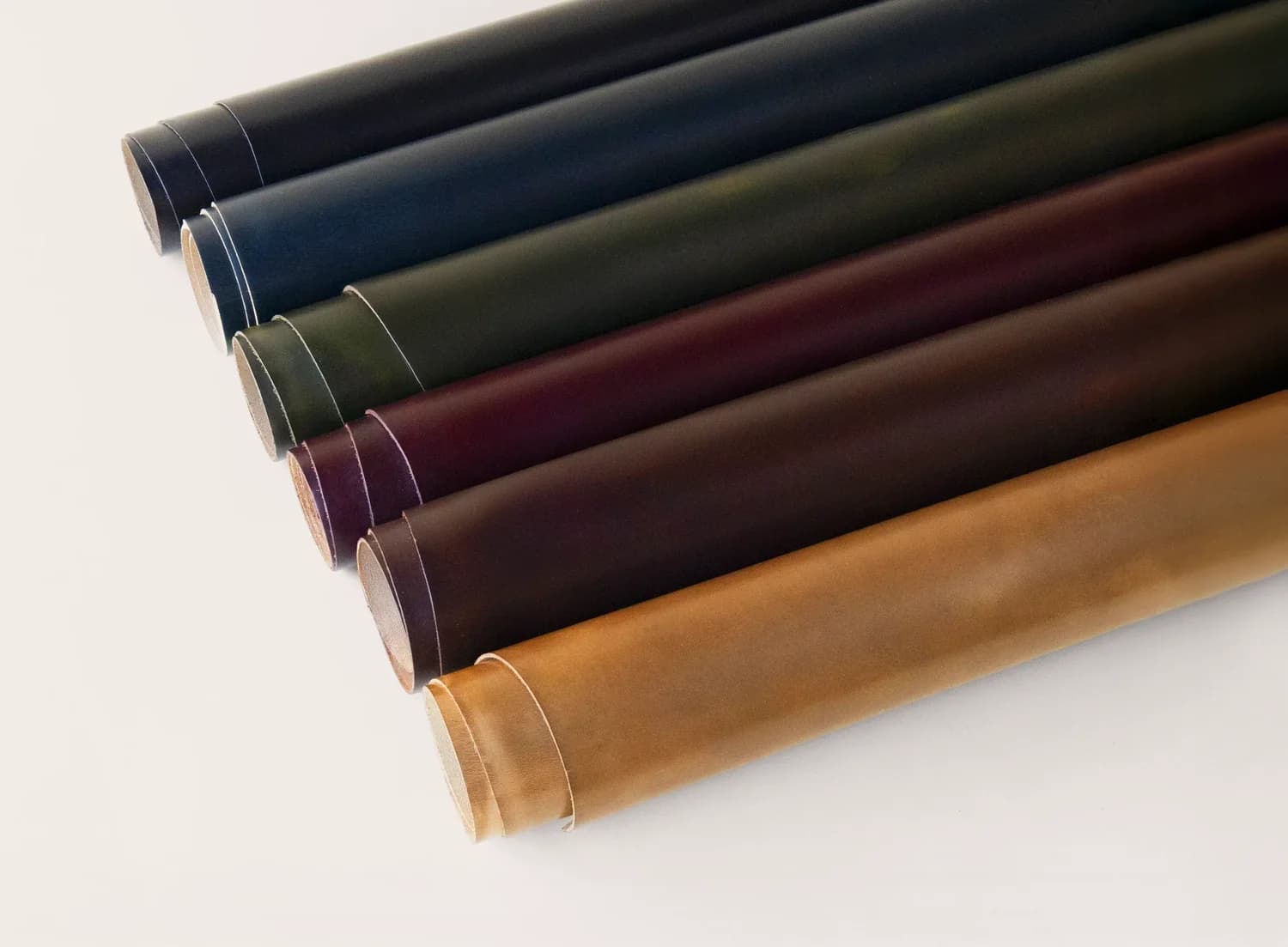
Rolled sides of Horween Chromexcel leather showing rich brown pull-up colors

Chromexcel

Horween Chromexcel is a full-aniline combination-tanned pull-up leather built through a chrome base, heavy bark retannage, genuine hot stuffing, and hand-applied finishes. Its supple, oil-rich body and exceptional range of weights make it a durable choice for footwear, bags, cases, belts, and other hard-used goods.

Spec Sheet

Identity & Origin

Tannery or Maker
Horween Leather Company
Product Family
Chromexcel
Production Status
Current
Made In
United States
Animal or Species
Primarily bovine cowhide; horsefront variants also exist
Hide Form
Side, Horsefront in selected variants

Construction & Finish

Grain or Layer
Full grain, full aniline
Tannage
Combination tanned: chrome base with heavy vegetable retannage
Special Process
Proprietary bark retannage, Genuine hot stuffing, Hand-rubbed aniline coats, Neatsfoot oil top treatment
Surface and Finish
Full-aniline, hand-rubbed pull-up finish
Temper
Soft

Dimensions & Availability

Typical Weight
2–10 oz · 0.8–4 mm
Typical Hide Size
Retail bovine sides commonly measure approximately 16.5 to 20 square feet.
Available Colors
Black, Brown, Burgundy, Natural, Navy, Greener Pastures

Material Character

Natural Variation
Full-aniline finishing leaves grain, scars, creases, and color range visible. Oils and waxes move under pressure, causing temporary lightening known as pull-up. Different Chromexcel variants and lots can differ materially.
Hand and Character
Supple, rounded, and oil rich, with a resilient body, smooth grain, and pronounced color movement when bent or pressed.
Structure and Stretch
Flexible and comfortable with more give than firm vegetable-tanned leather. It is strong, but unsupported panels can stretch or relax, especially when cut from looser areas of a side.

Working With It

Cutting and Skiving
Cuts readily, but the soft, wax-rich structure demands very sharp skiving tools and good support. Thin feather edges can become mobile or compress under the blade.
Sewing
Works well for hand and machine sewing. The leather closes around stitches, but oily surfaces and thicker weights require appropriate thread, needles, and presser-foot control.
Edge Behavior
Does not burnish like straight vegetable-tanned leather. Waxed natural edges, turned construction, or edge paint generally give more dependable results.
Tooling and Stamping
Not suited to crisp carving or deep stamping. The soft body and mobile oils cause impressions to soften and the surface to rebound.
Wet Forming
Can be coaxed into shape, but it is less crisp and less dimensionally fixed than firm vegetable-tanned tooling leather. Avoid heat during drying.
Finishing Behavior
The leather arrives heavily nourished and finished. Brushing can revive the surface; additional oils or waxes quickly change color and hand.
Wear and Patina
Pull-up emphasizes bends immediately, while abrasion and handling build a deep, varied patina. The leather tends to remain supple rather than drying into a rigid shell.
Practical Sensitivities
Oil content can interfere with some adhesives and edge paints. The soft grain may show creasing, loose-break variation, and pressure marks. It is not chrome-free.
Care Notes
Horween recommends beginning with a damp cloth and good brushing. When conditioning is actually needed, a small amount of suitable product such as neatsfoot oil should be tested first and the leather allowed to dry naturally away from heat.

Project Fit

Best Uses
Footwear, Boots, Bags, Travel goods, Cases, Belts, Straps, Wallets, Outerwear
Pairing Notes
Use stable linings or reinforcement where shape matters. Test contact cement and edge paint against the oil content, and consider turned or waxed edges when a glass burnish is not realistic.

Where To Buy

The Tannery Row

Horween Chromexcel · Side · 3 to 4 oz, 4 to 5 oz, 5 to 6 oz, and 8 to 9 oz · Black, Brown, Burgundy, Natural, Navy, Greener Pastures · First-quality sides · $279.00 · Starting retail price per side

Minimum: One side · Ships from Chicago, Illinois, United States · United States; contact supplier for other destinations

Current color and weight combinations vary. The linked listing is classic bovine Chromexcel rather than every variant in the broader family.

Price observed Aug 2, 2026

Sources

Topics: combination tanned, American leather, pull-up leather, footwear, bagsReviewed Aug 2, 2026
Rolled sides of Horween Dublin leather in several colors

Dublin

Horween Dublin is a waxed version of the tannery's vegetable-tanned Essex leather, with a supple body, pronounced natural grain, and a strong pull-up. It brings visible hide character to belts, totes, straps, wallets, and semi-structured bags while gaining a warm patina through use.

Spec Sheet

Identity & Origin

Tannery or Maker
Horween Leather Company
Product Family
Essex family
Production Status
Current
Made In
United States
Animal or Species
Bovine cowhide
Hide Form
Side

Construction & Finish

Grain or Layer
Full-grain side leather
Tannage
Vegetable tanned
Special Process
Essex base tannage, Infused with natural waxes, Hot plated
Surface and Finish
Waxed, grain-forward pull-up surface
Temper
Medium

Dimensions & Availability

Typical Weight
3–9 oz · 1.2–3.6 mm
Typical Hide Size
Approximately 18 to 22 square feet per side
Available Colors
Black, Brown Nut, Cobalt Blue, English Tan, Greener Pastures, Golf Green, Natural, Light Natural, Olde English, Russet Brown

Material Character

Natural Variation
Dublin intentionally shows grain, scars, color movement, and wax response. English Tan and Natural can vary notably between shipments because heat, humidity, oils, and waxes affect the final color.
Hand and Character
Supple but substantial, with a warm waxy hand, visible grain, and color that lightens where the leather bends or is pressed.
Structure and Stretch
More flexible than firm Italian wallet leathers but still capable of supporting belts and semi-structured bags. Stretch depends on cut direction and weight.

Working With It

Cutting and Skiving
Cuts cleanly with sharp tools. The wax content can make thin skives feel softer and more mobile than dry vegetable-tanned leather, so support the piece carefully.
Sewing
Suitable for hand or machine stitching. The surface compresses pleasantly around stitches, while heavier weights may require stronger needles and deliberate hole preparation.
Edge Behavior
Edges can be waxed and burnished, though the result is usually warmer and less glassy than Buttero or unfinished tooling leather. Edge paint is also appropriate for a more uniform finish.
Tooling and Stamping
Accepts creasing and simple marks but is not intended for deep carving or crisp basket stamping because the waxed finished surface and supple body soften impressions.
Wet Forming
Can take moderate shaping, but water may change color and wax distribution. Use scrap tests when the finished surface must remain consistent.
Finishing Behavior
Usually needs no added finish. Brushing and friction redistribute the waxes and deepen the glow; heavy coatings can obscure the natural pull-up.
Wear and Patina
High-contact areas become smoother and more luminous while bends and pressure points reveal color variation. Scratches tend to join the broader grain and wax story rather than remain isolated defects.
Practical Sensitivities
Color range is part of the article. Water, heat, pressure, and conditioners can move waxes or darken the surface, and adhesive cleanup requires care.
Care Notes
Start with brushing and a soft dry cloth. Condition lightly only when needed, and test first because the existing oil and wax content is already high.

Project Fit

Best Uses
Belts, Totes, Wallets, Straps, Semi-structured bags, Cases, Footwear
Pairing Notes
Use a stable lining or reinforcement where a bag needs more structure. Choose adhesives compatible with oily leather and test bond strength before committing to a large assembly.

Where To Buy

The Tannery Row

Horween Dublin · Side · 3 to 4 oz, 4 to 5 oz, 5 to 6 oz, and 8 to 9 oz · Black, Brown Nut, Cobalt Blue, English Tan, Greener Pastures, Golf Green, Natural, Light Natural, Olde English, Russet Brown · First-quality sides · $313.00 · Starting retail price per side

Minimum: One side · Ships from Chicago, Illinois, United States · United States; contact supplier for other destinations

Current combinations vary by color and weight. Natural and English Tan show especially broad lot-to-lot color range.

Price observed Aug 2, 2026

Sources

Topics: vegetable tanned, American leather, pull-up leather, belts, bagsReviewed Aug 2, 2026
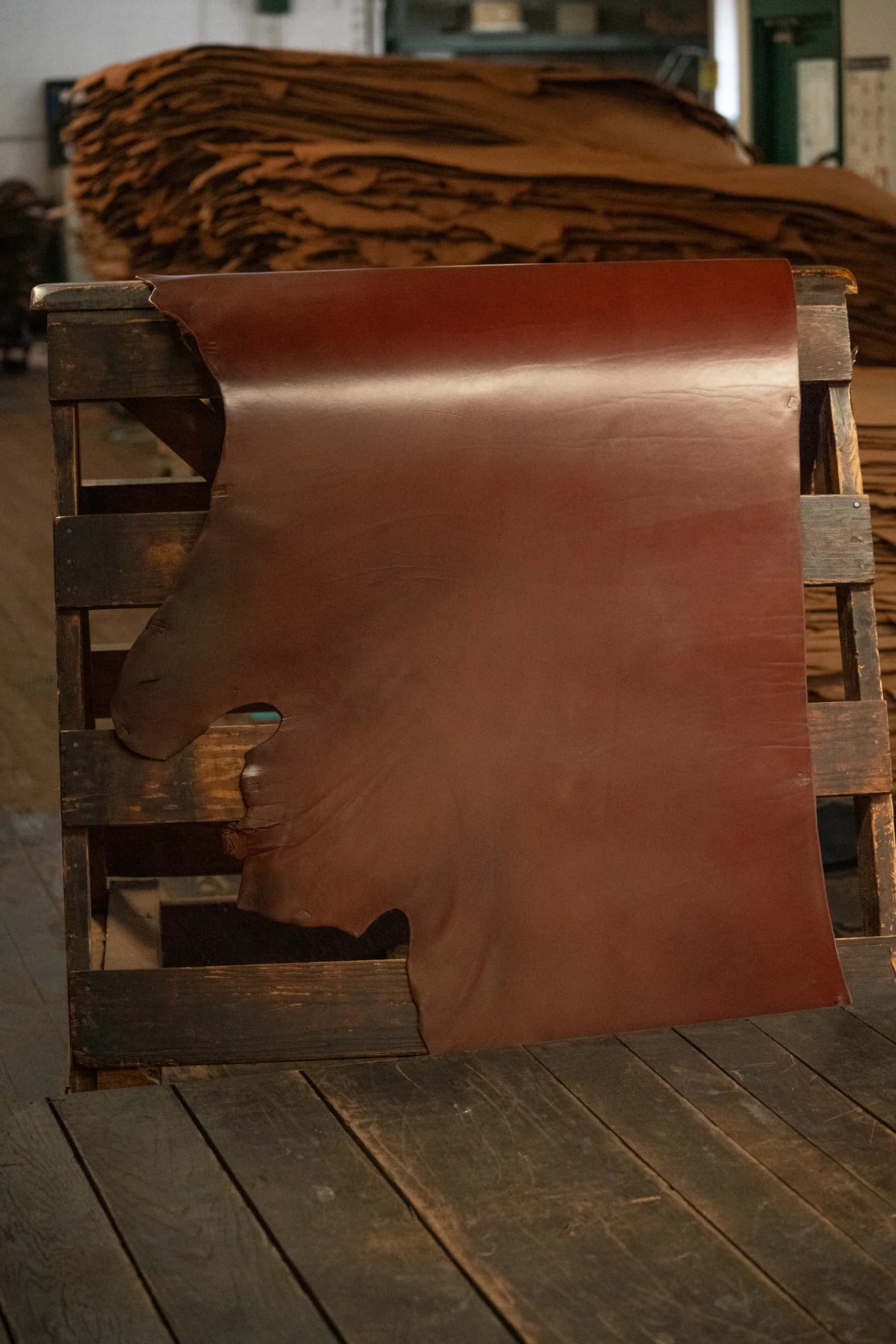
British Brown Hermann Oak English Bridle leather displayed on a wooden rack

English Bridle

Hermann Oak English Bridle is a dense, full-grain vegetable-tanned side leather with rich color, a refined sheen, a finished moss back, and edges that burnish naturally. Its stability and strength make it a serious material for belts, tack, straps, and highly structured goods.

Spec Sheet

Identity & Origin

Product Family
English Bridle
Production Status
Current
Made In
United States
Animal or Species
U.S. bovine cowhide
Hide Form
Side, Back by special order

Construction & Finish

Grain or Layer
Full grain with finished moss back
Tannage
Traditional vegetable tannage
Special Process
Drum dyed, Waxed bridle finish, Finished moss back
Surface and Finish
Smooth, rich sheen with natural wax bloom
Temper
Very Firm

Dimensions & Availability

Typical Weight
8–12 oz · 3.2–4.8 mm
Typical Hide Size
Approximately 21 to 24 square feet per retail side, often 30 to 36 inches wide and 85 to 100 inches long
Available Colors
Black, British Brown, Chestnut, Havana, London Tan

Material Character

Natural Variation
Full-grain sides retain natural markings and modest color variation. Wax may rise to the surface as pale bloom in cool conditions and can be redistributed by brushing.
Hand and Character
Dense, compact, firm, and authoritative, with a smooth grain, refined sheen, and unusually finished flesh side.
Structure and Stretch
Highly stable and resistant to stretch, especially through the back and bend. Shoulder and belly areas still require careful layout when cutting long straps.

Working With It

Cutting and Skiving
Cuts cleanly with sufficiently sharp tools but demands control because of its density and thickness. Skiving and splitting are often necessary for folds, keepers, and layered assemblies.
Sewing
Supports crisp hand or machine stitching, but heavy stock requires suitable needles, awls, thread, and punching force. Plan turns and layered seams before cutting.
Edge Behavior
Traditional edges burnish to a compact glossy finish without requiring edge paint, one of the defining advantages of the tannage.
Tooling and Stamping
Can accept modest tooling and stamping, especially in supplier-selected stock, but the finished grain and dense bridle character are not optimized for deep carving.
Wet Forming
Capable of limited shaping, but its firm, heavily finished structure resists dramatic molding. Strap and case construction are more natural fits.
Finishing Behavior
The grain and moss back arrive finished. Buffing brings up the sheen, and vigorous horsehair brushing redistributes visible wax bloom.
Wear and Patina
Edges become polished, high-contact areas deepen, and the surface gains a restrained luster rather than the rapid textural transformation seen in Pueblo.
Practical Sensitivities
Its weight and resistance can frustrate a maker who has not planned folds, skives, or hardware clearances. Wax bloom is normal and should not be mistaken for mold.
Care Notes
Brush with horsehair and buff before adding product. Use a compatible conditioner sparingly; excess can soften the structure or darken lighter colors.

Project Fit

Best Uses
Belts, English tack, Western tack, Pet collars and leads, Straps, Satchels, Panniers, Structured cases
Pairing Notes
Use hardware sized for the finished thickness and reinforce only where the design truly needs it. The finished moss back can remain unlined in many straps and belts.

Where To Buy

Weaver Leather Supply

Hermann Oak English Bridle Leather · Side · 10 to 12 oz on the current retail listing · Black, British Brown, Chestnut, Havana, London Tan · Tannery Run · $360.00 · Retail price per side based on average square feet

Samples available · Minimum: One side or one paid sample · Ships from Mount Hope, Ohio, United States · United States and international destinations

Weaver lists approximately 21 to 24 square feet per side and offers a low-cost sample. Current variants should be checked before ordering.

Price observed Aug 2, 2026

Sources

Topics: vegetable tanned, American leather, bridle leather, belts, tackReviewed Aug 2, 2026
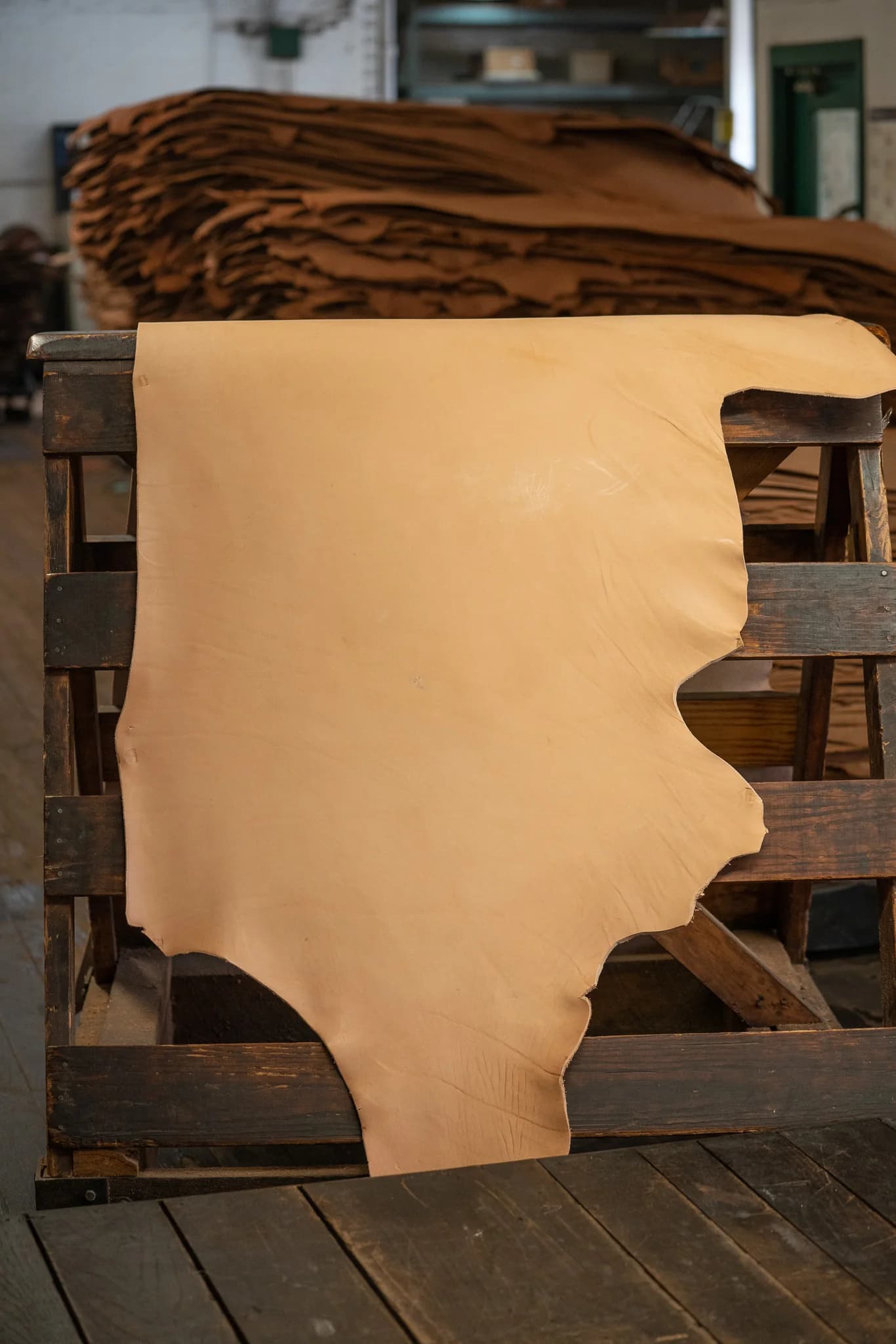
Natural Hermann Oak Strap and Tooling leather displayed on a wooden rack

Natural Strap

Hermann Oak Natural Strap is a firm, uncolored vegetable-tanned tooling leather that cuts smoothly, stamps crisply, molds with definition, dyes evenly, and burnishes readily. It is a demanding but exceptionally capable blank canvas for belts, holsters, sheaths, carved work, and molded goods.

Spec Sheet

Identity & Origin

Product Family
Natural Strap and Tooling
Production Status
Current
Made In
United States
Animal or Species
U.S. bovine cowhide
Hide Form
Side, Back, Single bend

Construction & Finish

Grain or Layer
Full grain with natural grain enamel retained
Tannage
Traditional vegetable tannage without chrome salts
Special Process
Vegetable tannins introduced without prior pickling, Natural grain enamel retained, Dry-skived retail variants
Surface and Finish
Natural, undyed tooling surface
Temper
Very Firm

Dimensions & Availability

Typical Weight
2–11 oz · 0.8–4.4 mm
Typical Hide Size
Approximately 21 to 24 square feet per retail side, often 30 to 36 inches wide and 85 to 100 inches long
Available Colors
Natural

Material Character

Natural Variation
The pale unfinished surface shows scars, grain variation, handling marks, moisture, oil, and dye differences immediately. These marks can become part of the finished narrative but cannot be hidden by the original finish.
Hand and Character
Firm, dense, pale, and dry when new, with a strong natural body and an open working surface intended to receive moisture, tools, dyes, oils, and finishes.
Structure and Stretch
Highly stable through the back and bend and capable of drying to a firm shape after molding. Belly and shoulder areas remain looser and should be placed intentionally.

Working With It

Cutting and Skiving
Cuts smoothly because of its dense salt-free structure. Sharp knives produce clean bevels and skives, but heavy stock requires patience and controlled depth.
Sewing
Supports crisp stitch marking and durable hand or machine seams. Heavy weights require proper awls, needles, and thread, and molded pieces should be allowed to dry fully before final assembly.
Edge Behavior
Burnishes exceptionally well, producing dense, smooth edges that can be dyed, waxed, and polished to a high finish.
Tooling and Stamping
A primary strength. The leather cases, stamps, carves, embosses, and takes modeling with crisp definition when moisture is managed correctly.
Wet Forming
Molds sharply and dries to a firm, durable form, making it a standard choice for holsters, sheaths, cases, and dimensional work.
Finishing Behavior
Accepts dye, oil, antique, resist, and top finish. Even preparation matters because the natural surface reveals uneven wetting, contaminated tools, and inconsistent application.
Wear and Patina
Untreated Natural begins pale and develops a golden, then deeper amber patina through light, handling, oil, and use. Maker-applied color and finish largely determine the final aging path.
Practical Sensitivities
The unfinished surface stains easily and exposes uneven moisture, dye, oil, glue, and handling. Chrome-free does not mean maintenance-free, and metal contact should be considered during finishing.
Care Notes
Care depends on the maker-applied finish. Before construction, protect clean stock from dirty hands and metal dust. After finishing, follow the chosen dye and topcoat system and condition only as needed.

Project Fit

Best Uses
Belts, Holsters, Sheaths, Tooling, Carved leather, Wet-molded cases, Straps, Briefcases
Pairing Notes
Plan the complete dye, oil, antique, resist, and topcoat sequence before assembly. Match reinforcement and hardware to the final molded and layered thickness rather than the raw side alone.

Where To Buy

Weaver Leather Supply

Hermann Oak Veg Tanned Strap Sides · Side · 2 to 3 oz through 10 to 11 oz in one-ounce ranges · Natural · Tannery Run · $310.00 · Retail price per side based on average square feet

Splitting available · Samples available · Minimum: One side or one paid sample · Ships from Mount Hope, Ohio, United States · United States and international destinations

Weaver lists approximately 21 to 24 square feet per side and a broad set of pre-split weights. The 9 to 10 oz option is gauged in the butt.

Price observed Aug 2, 2026

Sources

Topics: vegetable tanned, American leather, tooling leather, belts, holstersReviewed Aug 2, 2026
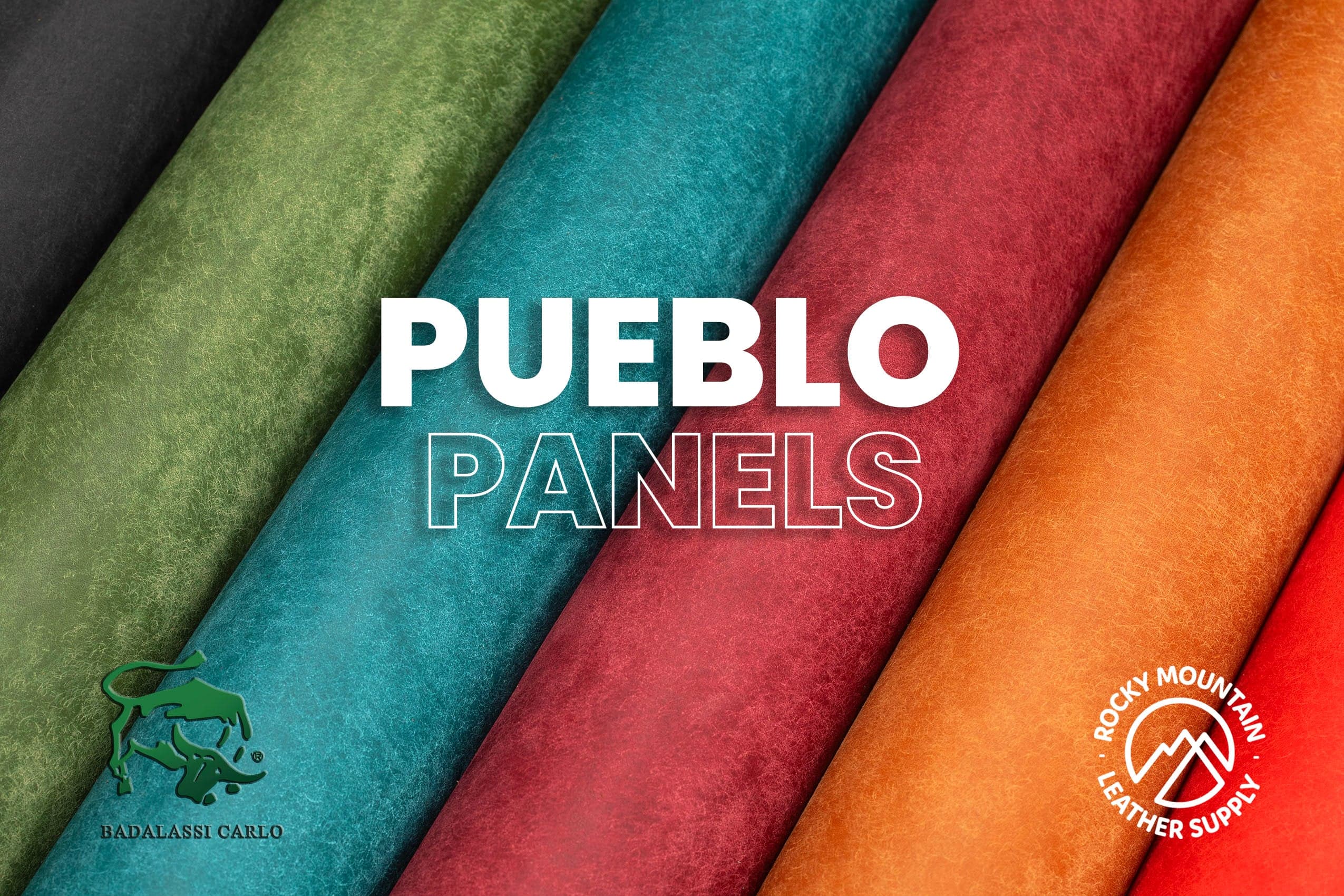
Assorted colors of Badalassi Carlo Pueblo leather arranged in overlapping panels

Pueblo

Badalassi Carlo Pueblo is a full-grain Tuscan vegetable-tanned leather with a deliberately matte, lightly abraded surface. It cuts and skives predictably, burnishes cleanly, and develops a fast, dramatic patina that makes it especially rewarding for wallets and other small goods.

Spec Sheet

Identity & Origin

Tannery or Maker
Badalassi Carlo
Product Family
Minerva family
Production Status
Current
Made In
Italy
Animal or Species
Bovine cowhide
Hide Form
Shoulder, Double shoulder, Panels

Construction & Finish

Grain or Layer
Full grain with an intentionally abraded grain surface
Tannage
Vegetable tanned
Special Process
Traditional Tuscan vacchetta process, Surface abrasion or brushing, Dyed through
Surface and Finish
Matte, fibrous, lightly napped aniline surface
Temper
Medium

Dimensions & Availability

Typical Weight
2.5–5.5 oz · 1–2.2 mm
Typical Hide Size
Badalassi Carlo produces shoulders; retail panels and quarter hides are commonly available.
Available Colors
Natural (Bone), Cognac, Olmo, Siena, Walnut, Tobacco, Dark Brown, Black, Gray, Red, Yellow, Emerald Green, Olive Green, Aqua, Ortensia (Turquoise), Sapphire Blue, Navy Blue, Violet, Coccinella, Bordeaux, Pink

Material Character

Natural Variation
The grain, matte nap, scars, and color vary across a natural shoulder. Dye lots and screen display also affect apparent color. The abraded surface is meant to become smoother and darker in high-contact areas.
Hand and Character
Dense and balanced, with a dry, paper-like matte surface when new. It warms quickly in the hand and becomes smoother and more lustrous with use.
Structure and Stretch
Stable enough for crisp small goods while retaining enough flexibility for folded wallet shells. It softens with handling but is not loose or drapey.

Working With It

Cutting and Skiving
Cuts cleanly with a sharp knife and skives predictably. The visible fiber structure makes thickness changes easy to read, which is useful when learning pocket construction.
Sewing
Hand stitches settle neatly into the firm surface. Consistent marking and tension produce a crisp line without requiring heavy reinforcement for ordinary small goods.
Edge Behavior
Burnishes readily to a smooth, darkened edge with water, canvas, and a suitable burnishing compound. A glass slicker also polishes and darkens the grain surface.
Tooling and Stamping
Accepts creasing and modest decorative stamping, but the signature surface is not intended to behave like unfinished tooling leather.
Wet Forming
The vegetable tannage permits light shaping, but water can alter the color and flatten the matte finish. Test on scrap before forming a visible part.
Finishing Behavior
Usually needs little added finish. Slicking or conditioning deepens color and accelerates surface polishing, so treatments should be tested first.
Wear and Patina
Patina develops quickly. Contact areas darken, the initial nap compresses, and a warm sheen emerges while lower-contact areas retain more of the original matte texture.
Practical Sensitivities
Water, oil, pressure, and adhesive can darken the surface. The dramatic color change is part of the article's appeal but makes careless glue cleanup easy to see.
Care Notes
Begin with a soft brush or dry cloth. Condition sparingly and only when the leather feels dry, testing first because most conditioners darken Pueblo noticeably.

Project Fit

Best Uses
Wallets, Cardholders, Watch straps, Notebook covers, Small bags, Structured handbags
Pairing Notes
Use thinner Pueblo or another firm lining leather for wallet interiors. Keep reinforcement light so the finished piece can fold cleanly, and test adhesives on the absorbent grain surface.

Where To Buy

Rocky Mountain Leather Supply

Badalassi Carlo Pueblo Veg Tanned Leather Panels · 9 x 16 inch panel, 12 x 12 inch panel, 12 x 24 inch panel, Quarter hide · Stock 5.5 oz / 2.2 mm, with custom splitting · Natural (Bone), Cognac, Olmo, Siena, Walnut, Tobacco, Dark Brown, Black, Gray, Red, Yellow, Emerald Green, Olive Green, Aqua, Ortensia (Turquoise), Sapphire Blue, Navy Blue, Violet, Coccinella, Bordeaux, Pink · Panels advertised at 90%+ expected yield · $23.99 · Starting retail price for a one-square-foot panel

Splitting available · Minimum: One panel · Ships from Sandy, Utah, United States · United States; international options vary by destination

Colors and panel formats are selectable; custom splitting is final sale and subject to tolerance.

Price observed Aug 2, 2026

Sources

Topics: vegetable tanned, Italian leather, wallet leather, small goods, patinaReviewed Aug 2, 2026